(Women’s Health Clinic Dublin | Hormones, Gut & Fertility)
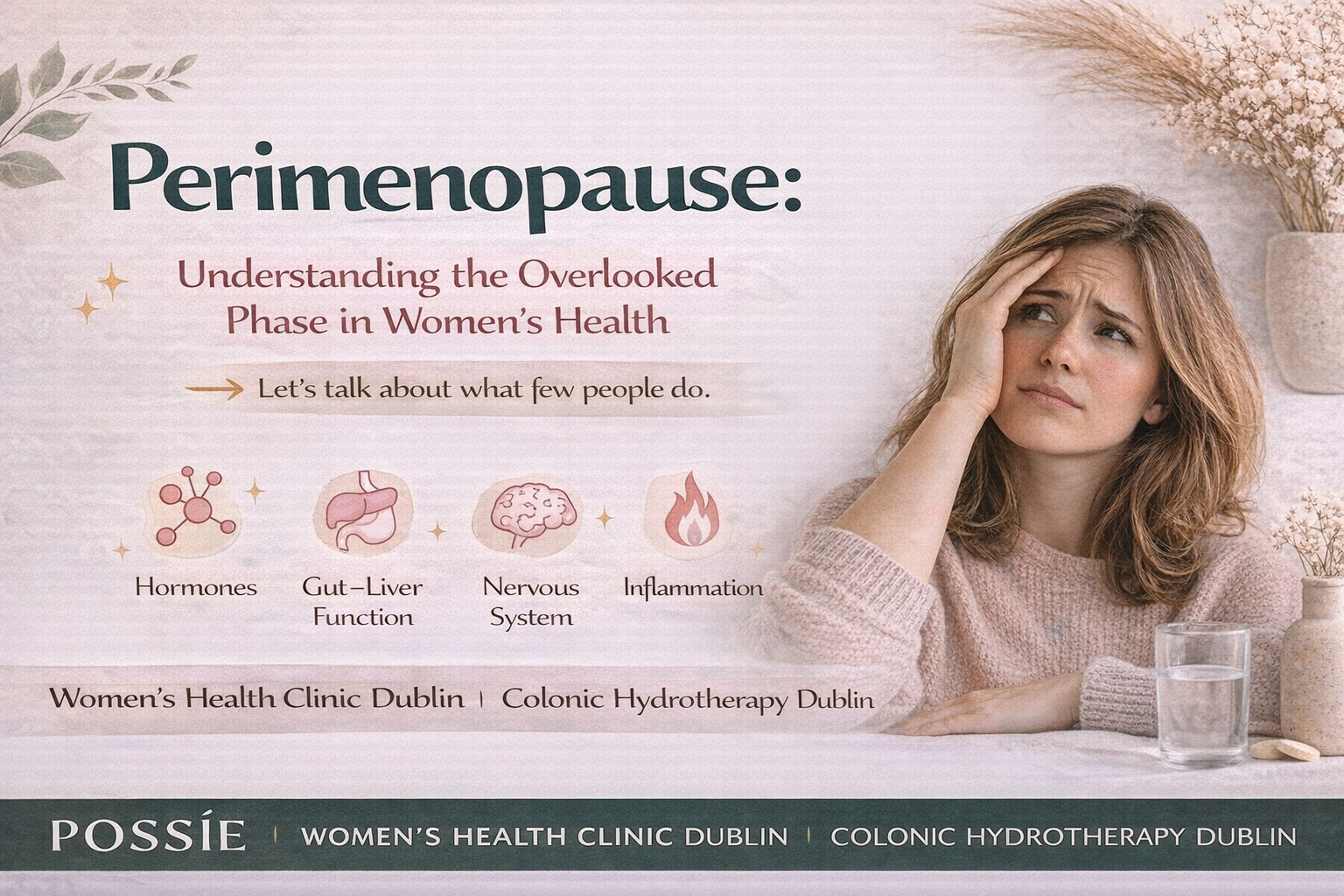
Perimenopause is one of the most misunderstood phases in women’s health.
Not because it’s rare —but because it’s rarely explained properly.
Many women come into clinic saying:
“I don’t feel like myself anymore.”“My anxiety has come out of nowhere.”“I’m exhausted, but I can’t switch off.”
And often, they’re told:
“Your bloods are normal.”“It’s just stress.”“It’s your age.”
But what’s happening is far more nuanced than that.
🌿 What Is Perimenopause — Really?
Perimenopause is not just the lead-up to menopause.
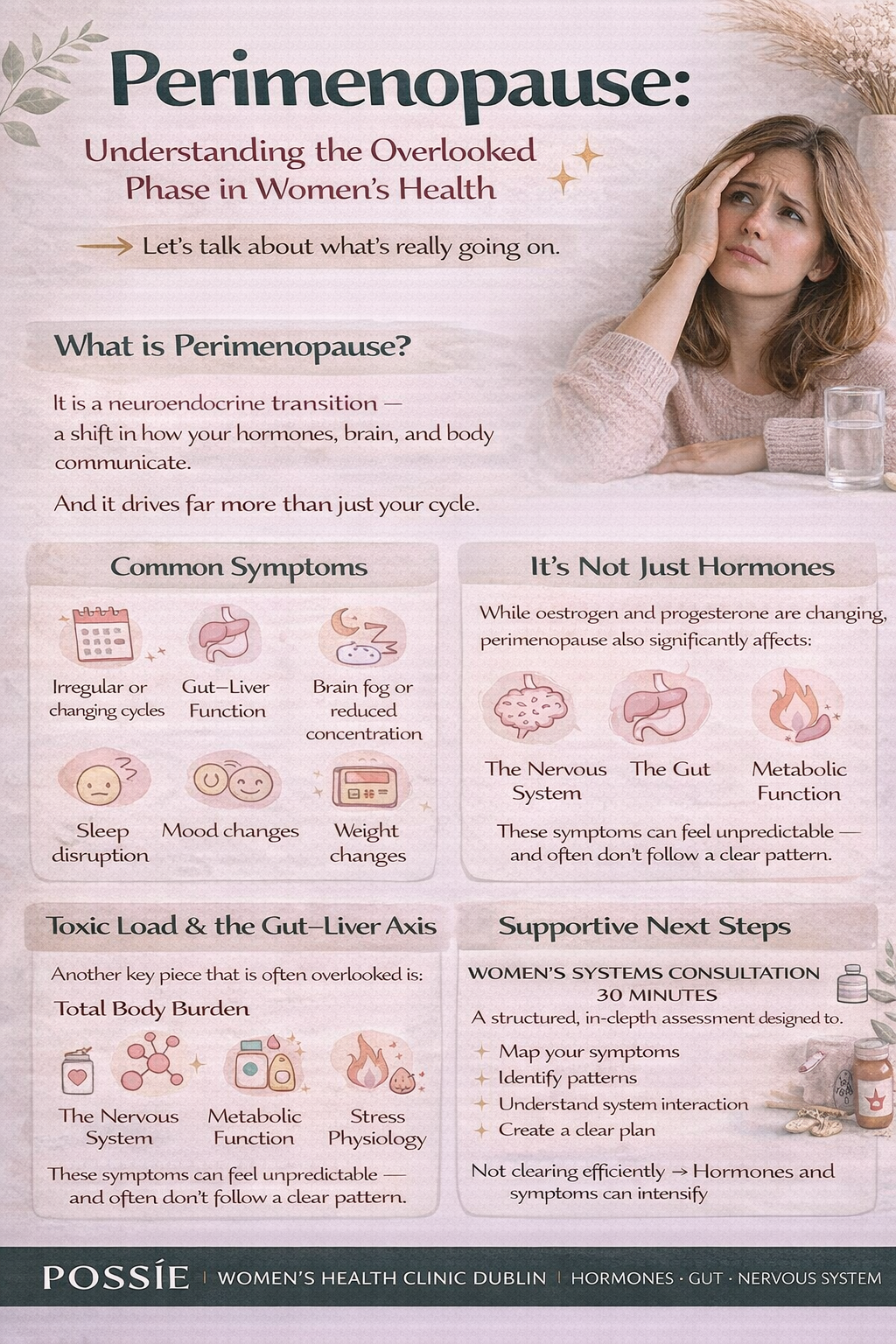
It is a neuroendocrine transition —a shift in how your hormones, brain, and body communicate.
And it affects far more than just your cycle.
🌿 Common Symptoms
Irregular or changing cycles
Anxiety or increased emotional sensitivity
Brain fog or reduced concentration
Sleep disruption
Mood changes
Weight changes
Fatigue or burnout
Increased sensitivity to stress
These symptoms can feel unpredictable —and often don’t follow a clear pattern.
🌿 It’s Not Just Hormones
While oestrogen and progesterone are changing,perimenopause also significantly affects:
The nervous system
The gut
Metabolic function
Stress physiology
This is why symptoms often feel systemic — not isolated.
🌿 The Stress Response & “Adrenal” Piece
Many women in perimenopause experience symptoms that are often described as “adrenal fatigue.”
While this isn’t a formal medical diagnosis, it reflects something very real:
👉 Chronic nervous system activation and stress load
Over time, prolonged stress can affect:
Cortisol rhythm
Energy regulation
Sleep quality
Hormonal signalling
In perimenopause, the body becomes more sensitive to stress.
So what may have been manageable before can now feel overwhelming.
This can present as:
Wired but tired
Morning fatigue
Afternoon crashes
Anxiety spikes
Difficulty recovering from stress
🌿 The Role of Toxic Load & the Gut–Liver Axis
Another key piece that is often overlooked is:
👉 Total body burden
This includes:
Inflammatory load
Environmental exposures
Hormonal metabolites
Gut dysfunction
Your body clears hormones through the liver and gut.
If this system is under strain:
Hormones may not be metabolised efficiently
Symptoms can intensify
Inflammation can increase
This is where many women feel:
“I’m doing everything right — but I still feel off.”
🌿 How the Gut & Colon Come Into This
The digestive system plays a central role in:
Hormone clearance
Inflammatory regulation
Nervous system signalling
When digestion is sluggish or imbalanced:
Hormonal symptoms can worsen
Bloating and discomfort increase
Energy becomes more unstable
More on the Gut in this blog I wrote: Bloating, IBS & Gut Health in Women: What Your Body Is Trying to Tell You
🌿 Colonic Hydrotherapy as Support
Within a clinically structured plan, colonic hydrotherapy can be used as a supportive therapy to:
Improve bowel motility
Reduce stagnation within the gut
Support elimination pathways
Lower overall inflammatory burden
For some women, this can contribute to:
A feeling of lightness
Reduced bloating
Improved digestive awareness
A sense of physiological “reset”
It is not a standalone treatment —but part of a broader, systems-based approach.
🌿 The Vagus Nerve & Nervous System Regulation
One of the most important (and often missed) aspects of perimenopause is:
👉 Nervous system regulation
The vagus nerve plays a key role in:
Digestion
Stress response
Hormonal signalling
Inflammatory control
When the nervous system is dysregulated:
Digestion slows
Hormonal communication becomes less stable
Symptoms intensify
Supporting the body into a more regulated state can:
Improve symptom resilience
Support digestive function
Reduce overall stress load
This is why trauma-informed care is not optional — it’s clinical.
🌿 Why Many Women Feel Unsupported
Because:
Symptoms are broad and fluctuating
Blood tests don’t always reflect what’s happening
Time in consultations is limited
So women are often left managing symptomswithout understanding the full picture.
🌿 What Actually Helps
A systems-based approach that looks at:
👉 Hormones👉 Gut function👉 Nervous system regulation👉 Stress physiology👉 Inflammatory load
Together.
Here is a blog I wrote about Hormonal Imbalance.
🌿 Where to Start
Women’s Systems Consultation — 90 Minutes
This is a structured, in-depth assessment designed to:
Map your symptoms
Identify patterns
Understand system interaction
Create a clear plan
Gut Reset Pathway — Colonic Hydrotherapy + Consultation
If you are experiencing:
Bloating
Sluggish digestion
Feeling “heavy” or inflamed
Gut-related symptoms alongside hormonal changes
This is a supportive entry point.
🌿 Final Thought
Perimenopause is not dysfunction.
It is a transition that increases sensitivity —to stress, to inflammation, and to imbalance.
When you understand the system behind your symptoms:
👉 things stop feeling random👉 and start making sense
And that’s where real support begins.