Why Does My BV Keep Coming Back? An Integrative Guide to Understanding Recurrent Bacterial Vaginosis
By Sarah Possié RM | Women's Health & Gut Clinic
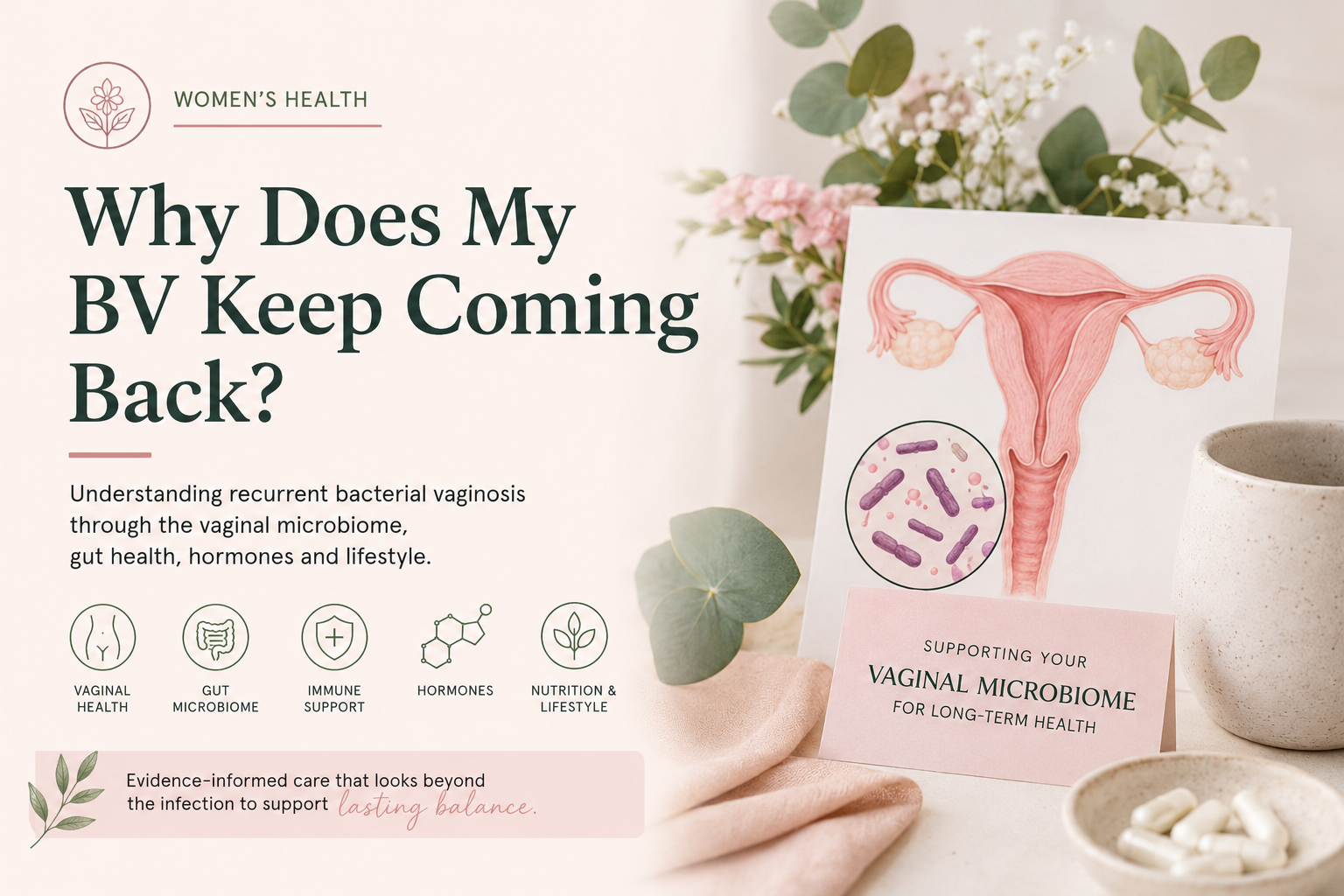
If you've experienced bacterial vaginosis (BV) more than once, you'll know how frustrating it can be.
The symptoms improve, you complete your treatment, and then a few weeks or months later... it's back again.
Many women begin to wonder:
"Am I doing something wrong?"
"Why does it keep returning?"
"Will I have this forever?"
The good news is that recurrent BV is common, and there are often underlying factors that can be explored. At Women's Health & Gut Clinic, we don't just focus on treating the infection—we look at why it may be recurring and how we can support your overall vaginal and immune health.
What is Bacterial Vaginosis?
Bacterial vaginosis occurs when the natural balance of bacteria in the vagina changes.
A healthy vagina is usually dominated by protective Lactobacillus bacteria. These bacteria help maintain an acidic environment that discourages the growth of other organisms.
When Lactobacillus levels decrease, other bacteria—such as Gardnerella vaginalis—can multiply, leading to BV.
Common symptoms include:
Thin grey or white discharge
A fishy odour, particularly after intercourse
Changes in vaginal discharge
Mild irritation (although many women have no symptoms at all)
BV is not considered a sexually transmitted infection, although sexual activity can influence the vaginal microbiome.
Why Does BV Keep Coming Back?
The reason many women experience recurrent BV is because treating the infection doesn't always address the environment that allowed it to develop in the first place.
Think of your vaginal microbiome like a garden.
Antibiotics may remove the weeds, but unless the soil is healthy, the weeds often return.
Several factors can influence the vaginal microbiome:
Hormonal changes
Antibiotic use
Smoking
Internal washing or douching
Semen temporarily raising vaginal pH
New sexual partners
Chronic stress
Blood sugar imbalance
Changes during perimenopause
Understanding which of these factors may be relevant to you can help create a more personalised approach.
The Vaginal Microbiome
Your vagina contains billions of bacteria, most of which are beneficial.
Lactobacillus species help:
Maintain an acidic vaginal pH
Produce natural antimicrobial substances
Support the vaginal lining
Reduce the growth of potentially harmful bacteria
Research suggests that when Lactobacillus levels decline, the risk of recurrent BV increases.
This is why restoring the vaginal microbiome is an important consideration alongside appropriate medical treatment.
The Gut-Vaginal Connection
One area receiving increasing attention is the relationship between the gut microbiome and vaginal health.
The gut plays an important role in:
Immune regulation
Inflammation
Nutrient absorption
Hormone metabolism
When the gut microbiome becomes imbalanced (known as dysbiosis), it may influence immune function and the body's ability to maintain healthy microbial communities elsewhere, including the vagina.
Although the gut is rarely the sole cause of BV, improving digestive health may form part of a broader strategy to support overall wellbeing.
Supporting Your Immune System
Your immune system works continuously to help maintain balance throughout the body.
Factors that support healthy immune function include:
Adequate sleep
Stress management
Regular movement
Eating a varied, nutrient-rich diet
Maintaining healthy vitamin and mineral levels
Not smoking
Supporting your immune system doesn't replace medical treatment, but it may contribute to overall health while your body restores balance.
Could Hormones Be Playing a Role?
Hormones and the vaginal microbiome are closely connected.
Oestrogen helps maintain the vaginal lining and provides glycogen, which Lactobacillus bacteria use as a food source.
During:
Perimenopause
Menopause
Breastfeeding
Certain hormonal contraceptive changes
reduced oestrogen may alter the vaginal environment and increase susceptibility to recurrent symptoms.
What Testing May Be Helpful?
If BV continues to recur, it may be appropriate to investigate the wider picture.
Depending on your history, this may include:
Vaginal Assessment
Vaginal swab
Nugent scoring
Vaginal pH assessment
STI screening where appropriate
Vaginal microbiome testing
Blood Tests
Vitamin D
Iron studies
Thyroid function
Blood glucose or HbA1c
Hormone testing where clinically indicated
Advanced Functional Testing
For some women, further investigation of gut health or hormone metabolism may be appropriate as part of a personalised assessment.
Nutrition to Support Vaginal Health
Nutrition supports every system within the body, including the immune system and microbiome.
A balanced approach includes:
Plenty of colourful vegetables
High-fibre foods
Good-quality protein
Healthy fats
Fermented foods where appropriate
Adequate hydration
Reducing highly processed foods and supporting stable blood sugar levels may also contribute to overall wellbeing.
Lifestyle Tips
Small changes can make a difference.
Avoid internal washing or douching.
Choose fragrance-free products.
Wear breathable cotton underwear.
Support stress management.
Prioritise sleep.
Stop smoking if applicable.
When Should You Seek Medical Review?
Arrange medical review if:
Symptoms don't improve after treatment.
BV continues to recur.
You develop pelvic pain or fever.
You experience abnormal bleeding.
You are pregnant and develop symptoms.
You are concerned symptoms may represent another condition.
Our Integrative Approach
At Women's Health & Gut Clinic, we combine evidence-based women's healthcare with a whole-body perspective.
Rather than simply asking, "How do we treat this episode?" we also ask:
Why might this be recurring?
Is the vaginal microbiome supported?
Could hormones be contributing?
Is gut health playing a role?
Are there nutritional deficiencies?
Would further investigation help?
Every woman's story is different, which is why treatment should be personalised rather than one-size-fits-all.
If you're tired of recurrent BV and want to better understand the factors influencing your vaginal health, we'd be delighted to support you.
Book a Women's Health Consultation to begin exploring the root causes and create a personalised plan for your health.